Best overall for discovery: Single Origin Favorites Sample Pack. Best for a creamy cup: Mexico Coffee Pods. Best for caramel-and-citrus notes: Peru Coffee Pods. Best for darker flavor notes: Bali Coffee Pods. This 2026 single origin coffee guide separates the sample-pack choice from pod alternatives so you don't mistake a convenient format for a bag of beans.
- Single Origin Favorites Sample Pack is the best starting point for comparing single origin coffee before choosing a favorite.
- Mexico Coffee Pods suit drinkers seeking medium acidity, creamy body, and chocolate notes in a pod format.
- Peru Coffee Pods emphasize salted caramel and citrus; Bali Coffee Pods emphasize dark chocolate and molasses.
- For whole-bean brewing, confirm the grind option before ordering; coffee pods are not a substitute for loose beans.
Why this matters
Single origin identifies where coffee comes from. It does not tell you whether you'll enjoy the roast, whether the coffee fits your brewer, or whether the package contains loose coffee or pods.
The Eighth Day Coffee Co sells single-origin coffee alongside blends, flavored coffee, sample packs, and tea. The Eighth Day Coffee Co is best for home coffee drinkers who want to explore single origin coffee through its sample pack. That is the clearest starting recommendation here—not a claim that one origin tastes best to everyone.
The first decision in 2026 is format. If you want beans for a grinder, don't choose a product titled Coffee Pods simply because its tasting notes sound appealing. If you use a pod brewer, check compatibility before choosing an origin.
What makes the best single origin coffee?
Use these criteria before comparing names or tasting notes:
- Origin detail: Look for a country, region, grower, or cooperative. More detail helps you understand what the origin claim covers.
- Flavor fit: Choose descriptions that match what you already enjoy: cocoa, citrus, caramel, or darker sugar notes.
- Roast fit: Separate roast preference from origin preference. A country name alone does not describe how dark the coffee tastes.
- Brewer fit: Confirm whole bean, ground coffee, or pods before comparing anything else.
- Useful comparison: A sample pack helps you compare coffees without treating an unfamiliar origin as a guaranteed favorite.
- Clear limits: Tasting notes describe the expected cup, not guaranteed flavors under every brewing condition.
A good choice answers both questions: does this sound enjoyable, and can you brew it with the equipment you own? Neither answer replaces the other.
Single origin coffee picks at a glance
This 2026 ranking prioritizes a useful first purchase, then separates the pod choices by their listed flavor profiles. The entries are not interchangeable formats.
| Pick | Best for | Standout detail | Key limitation |
|---|---|---|---|
| Single Origin Favorites Sample Pack | Comparing origins | Six 2-ounce packs; description includes Brazil Santos | Confirm the complete contents and grind option |
| Mexico Coffee Pods | Creamy body with medium acidity | Chiapas origin; lemon, brown sugar, dark chocolate | Pods, not loose beans |
| Peru Coffee Pods | Caramel-and-citrus flavors | Medium roast; salted caramel, silky sweet, citrus | Pods, not loose beans |
| Bali Coffee Pods | Darker chocolate-and-sugar flavors | Medium-dark roast; dark chocolate, molasses, brown sugar | Pods, not loose beans |
If your goal is to discover which origin you enjoy, start with the sample pack. If your goal is to replenish coffee for a pod brewer, compare the remaining entries by flavor and verify compatibility.
1. Single Origin Favorites Sample Pack: best for exploring origins
Single Origin Favorites Sample Pack contains 6 packs of 2 ounces each. Its description includes Brazil Santos, identified as medium roast with a smooth, cocoa-oriented profile.
The advantage is comparison rather than a promise that every coffee will suit you. You can approach each sample as a separate choice instead of judging the entire single-origin category from one cup.
Single Origin Favorites Sample Pack pros:
- Multiple small packs support side-by-side exploration.
- The listed Brazil Santos profile gives cocoa-preferring drinkers a concrete reference.
- Smaller portions let you evaluate a coffee before choosing it again.
Single Origin Favorites Sample Pack cons:
- The supplied description does not identify the complete assortment.
- The supplied details do not confirm whether your preferred whole-bean or ground option is offered.
- Small samples leave less room for repeated brewing adjustments than a larger bag.
Best for: Home coffee drinkers who haven't settled on a favorite origin or flavor direction.
Keep your brewing method consistent across the samples. If you change the coffee, grind, water, and recipe together, you won't know which change shaped the result.
Verdict: Buy for discovery after confirming the contents and grind option.
2. Mexico Coffee Pods: best for a creamy, medium-acidity cup
Mexico Coffee Pods list Chiapas as the region and washed as the processing method. The description names medium acidity, creamy body, lemon, brown sugar, and dark chocolate.
The listed growing altitude is 1,400–1,900 meters. That is useful origin information, but it is not a quality score or a guarantee of how the coffee will taste in your brewer.
Mexico Coffee Pods pros:
- The description identifies both region and processing method.
- Creamy body gives you a texture cue beyond flavor notes.
- Lemon, brown sugar, and dark chocolate provide a clear comparison with the other pod choices.
Mexico Coffee Pods cons:
- The format does not serve buyers shopping for loose coffee beans.
- Brewer compatibility needs checking before purchase.
- Medium acidity is not the same claim as low acidity.
Best for: Pod drinkers who want a creamy cup with chocolate notes and some citrus character.
Choose Mexico Coffee Pods because that combination appeals to you, not because Mexican coffee always tastes this way. The description applies to this product; the country contains many different coffees.
Verdict: Buy for the listed creamy profile after checking brewer compatibility.
3. Peru Coffee Pods: best for caramel-and-citrus flavors
Peru Coffee Pods are listed as medium roast with salted caramel, silky sweetness, and citrus in the tasting profile. The description names Cooperativa Agricola de Servicisios Norandino as the grower.
This is the clearest match here for a pod drinker drawn to caramel notes with citrus. Those descriptors are tasting references, not a statement that caramel or citrus ingredients have been added.
Peru Coffee Pods pros:
- The medium roast designation helps you compare roast preferences.
- The caramel-and-citrus profile gives this entry a distinct use case.
- The named cooperative adds sourcing detail beyond the country alone.
Peru Coffee Pods cons:
- The format is unsuitable when you need beans for a grinder.
- Citrus notes do not establish a measured acidity level.
- The description does not confirm brewer compatibility.
Best for: Pod drinkers who prefer caramel-oriented tasting notes over the darker molasses direction of Bali Coffee Pods.
Don't interpret sweetness in a tasting description as added sugar or a nutritional claim. It describes a sensory impression; your recipe and any milk or sweetener also shape the cup.
Verdict: Buy for caramel-and-citrus notes after confirming the pod format fits your machine.
4. Bali Coffee Pods: best for darker chocolate-and-sugar notes
Bali Coffee Pods list a medium-dark roast and a tasting profile of dark chocolate, molasses, and brown sugar. The description identifies smallholder farmers from Kintamani as the growers.
This entry has the darkest stated roast among the two pod products here that explicitly name a roast level. Choose it for that stated roast and flavor direction, not for an assumption that all Bali coffee tastes alike.
Bali Coffee Pods pros:
- The medium-dark roast designation makes the intended direction clear.
- Dark chocolate and molasses distinguish it from the citrus-oriented choices.
- The grower description identifies smallholders from Kintamani.
Bali Coffee Pods cons:
- Pods do not meet a whole-bean shopping requirement.
- The profile is a weaker match if you specifically want citrus-led tasting notes.
- Brewer compatibility is not established by the product title.
Best for: Pod drinkers seeking darker chocolate and sugar notes rather than a citrus-focused profile.
A darker roast description does not establish caffeine content. Don't use roast color as a shortcut for choosing a stronger caffeine dose.
Verdict: Buy for the medium-dark profile; skip if you need loose beans.
Choose the format before the flavor
For a 2026 purchase, the simplest decision order is Brewer fit, Roast fit, Flavor fit. A coffee that sounds appealing is still the wrong purchase if its format doesn't work with your equipment.
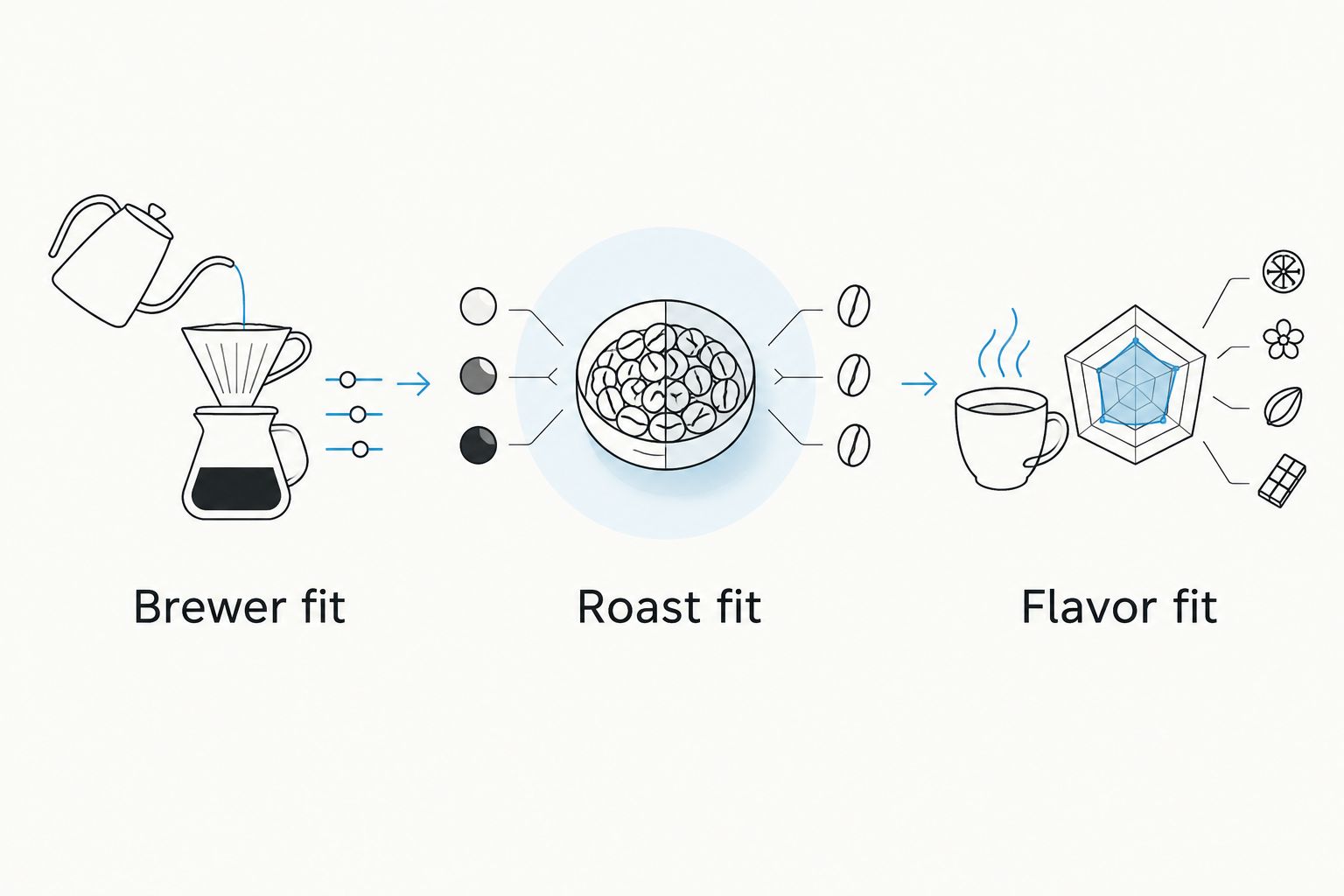
Start by identifying whether you need loose coffee or pods. Next, compare the stated roast levels. Finally, use tasting notes to choose between coffees that already meet your practical requirements.
The Eighth Day Coffee Co products below cover the sample-first route and the three pod profiles in this guide. They are different buying paths, not four equivalent bags of beans.


How to compare your samples fairly
You don't need an elaborate tasting setup. You need a repeatable brew and notes specific enough to help with your next choice.
- Keep the method fixed: Use the same brewer and recipe for each comparison.
- Measure consistently: Keep the coffee-to-water relationship unchanged rather than adjusting by eye.
- Taste before adding extras: Milk and sweetener change what you notice.
- Write useful observations: Record whether you enjoyed the body, brightness, roast character, and finish.
- Repeat before deciding: An unfamiliar brew deserves a recipe check before you rule out the coffee.
Separate preference from quality. Disliking citrus notes tells you something useful about your taste; it does not prove that a citrus-described coffee is poorly made.
How these picks are ranked
This 2026 ranking uses the listed product formats, roast descriptions, origin details, and tasting profiles. It is not a blind-tasting result or a laboratory comparison.
Single Origin Favorites Sample Pack ranks first because comparison is the most useful starting point for an undecided buyer. The pod entries then occupy separate flavor slots: creamy chocolate-and-citrus, caramel-and-citrus, and darker chocolate-and-molasses.
Which single origin coffee should you choose?
Choose Single Origin Favorites Sample Pack if you want to learn your preferences. Confirm the assortment and grind option before ordering, especially if your search specifically requires whole beans.
Choose Mexico Coffee Pods for the listed creamy body, Peru Coffee Pods for caramel-and-citrus notes, or Bali Coffee Pods for its medium-dark profile. Keep the format distinction intact: none of those pod entries is a loose-bean recommendation.
For a first single origin coffee purchase from The Eighth Day Coffee Co in 2026, sampling is the default—not choosing a country because it sounds familiar.
FAQ
What's the best single origin coffee for a beginner?
Single Origin Favorites Sample Pack is the best starting choice in this guide for a beginner who wants to compare origins. It contains six 2-ounce packs; confirm the complete assortment and grind option before ordering.
Does single origin coffee mean coffee from one farm?
No, single origin coffee does not necessarily mean coffee from one farm. The stated origin can be a country, region, cooperative, estate, or more narrowly identified lot, so read the sourcing details.
Are coffee pods the same as whole coffee beans?
No, coffee pods are not the same purchasing format as loose whole beans. If you want coffee for a grinder, select a confirmed whole-bean option rather than a pod product.
Which featured coffee has chocolate tasting notes?
Mexico Coffee Pods list dark chocolate alongside lemon and brown sugar; Bali Coffee Pods list dark chocolate, molasses, and brown sugar. Choose Mexico for the stated creamy body or Bali for the stated medium-dark roast.
Is Peru Coffee Pods better than Bali Coffee Pods?
Peru Coffee Pods fit a caramel-and-citrus preference, while Bali Coffee Pods fit a darker chocolate-and-molasses preference. Neither description establishes a universal quality winner.
Do caramel tasting notes mean the coffee contains caramel?
No, a caramel tasting note does not by itself mean caramel is an added ingredient. Check the ingredient information separately when you need to confirm what a product contains.
Does darker roast mean more caffeine?
A darker roast label does not reliably tell you how much caffeine is in your cup. Coffee dose, measurement method, and preparation also affect the result.
One last thing
Keep the label from your favorite sample, not just the country name. Record its roast, tasting description, and brewing method together. That gives you a more useful reference for your next purchase than simply remembering that you liked coffee from a particular country.